Posted in Branding

Building a Disability-Led, Female-Owned Toilet Paper Startup

Reading time: 2 min

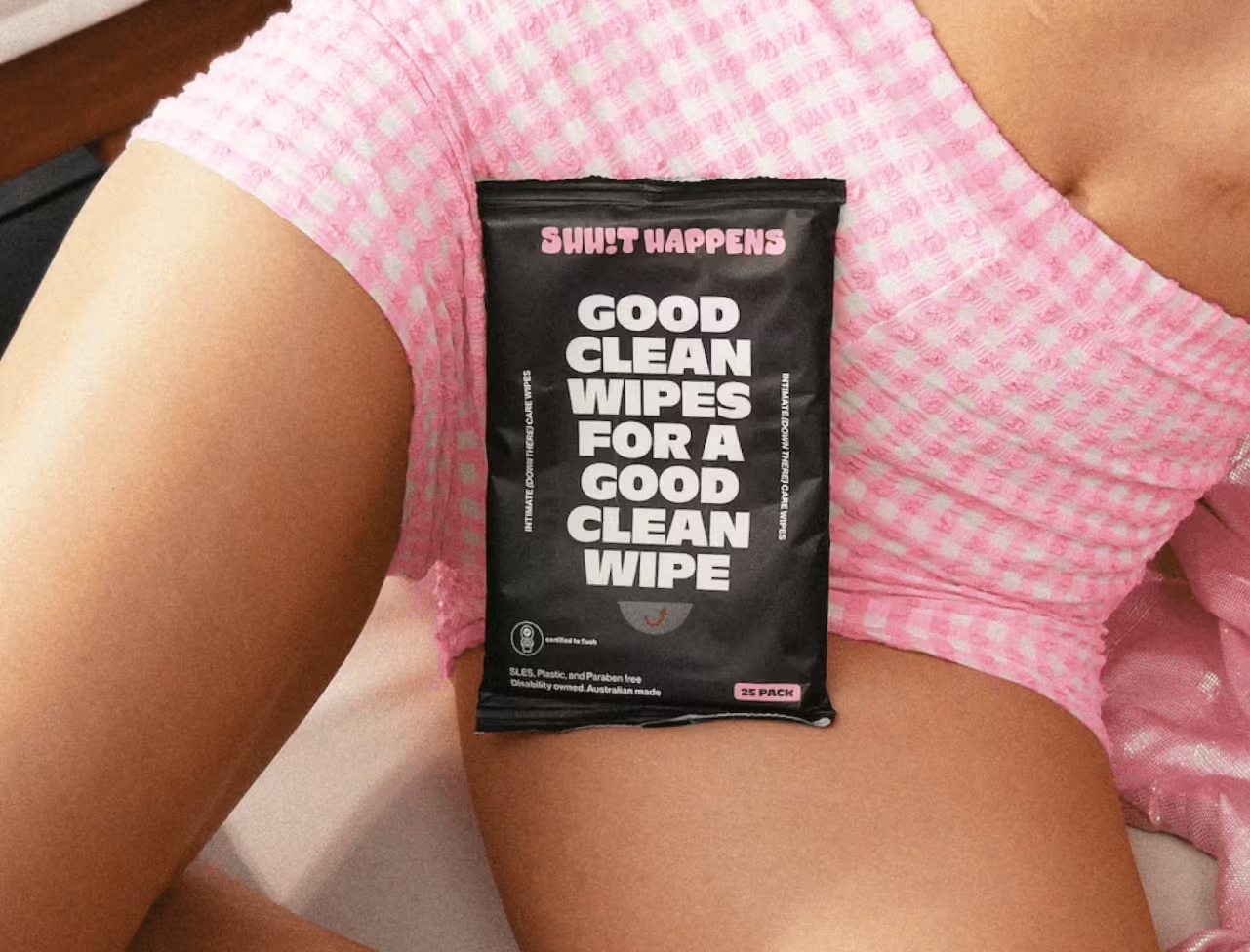
Shh!t Happens Wipes image

Consumer categories do not get much more commoditised than toilet paper. When Shht Happens came to us (a disability-led, female-owned startup entering that market) the challenge was clear: how do you build a brand that matters when the product is literally interchangeable?

The answer is brand development. Not a prettier package. A complete system (strategy, naming, identity, and design) that gives people a reason to choose you.

Starting with strategy

Before any design, we defined what Shht Happens stands for: accessibility, sustainability, and unapologetic humour in a category that takes itself too seriously.

That positioning shaped everything, from the name (memorable, ownable, conversation-starting) to the visual identity and packaging design.

Brand naming in a crowded market

Naming in consumer goods requires balancing distinctiveness with clarity. Shht Happens needed to be bold enough to stop someone mid-aisle, ownable enough to trademark, and flexible enough to extend across product lines.

Identity and packaging design

The identity system was built for shelf impact and digital shareability, bold colour, confident typography, and illustration that reflects the brand’s personality without feeling gimmicky.

Packaging design was treated as a brand touchpoint, not an afterthought, because in consumer goods, the package is the first brand experience.

What founders can learn

Entering a commoditised market is a brand development problem, not a product problem. The founders who win are the ones who invest in strategy and identity early. Beforethey are fighting for shelf space with a generic logo and a prayer.

To discuss strategy, identity, or a full brand development engagement, start a conversation with our studio.

Questions founders ask

How do you build a brand in a commoditised category?

With strategy, not a prettier package. When the product is effectively interchangeable, the brand is the reason someone chooses you. For Shht Happens that meant defining what the company stands for first, then building naming, identity and packaging design as one system around that position.

What did the positioning work define for Shht Happens?

Three things the brand stands for: accessibility, sustainability and unapologetic humour in a category that takes itself too seriously. That positioning then shaped everything downstream, from the name through to the visual identity and packaging design. The strategy came before any design decision, which is what made the design defensible.

What makes a good name in consumer goods?

Balance between distinctiveness and clarity. Shht Happens needed to be bold enough to stop someone mid-aisle, ownable enough to trademark, and flexible enough to extend across product lines. Those three tests knock out most of the names people fall in love with. Naming runs about three weeks.

How should packaging be treated in a brand system?

As a brand touchpoint, not an afterthought. In consumer goods the package is the first brand experience, so it has to carry the positioning at shelf scale and hold up when shared digitally. For Shht Happens that meant bold colour, confident typography and illustration that gives personality without tipping into gimmick.

What can other founders take from this?

That entering a commoditised market is a brand development problem, not a product problem. The founders who win are the ones who invest in strategy and identity early, before they are competing for shelf space with a generic logo. The category does not reward waiting until the product is perfect.

We partner with businesses at moments that matter. From startups to scaleups, Maker Street Studios is structured to set up, scale, and launch impactful brands.

Book a free strategy call